What Is Wu Xing?
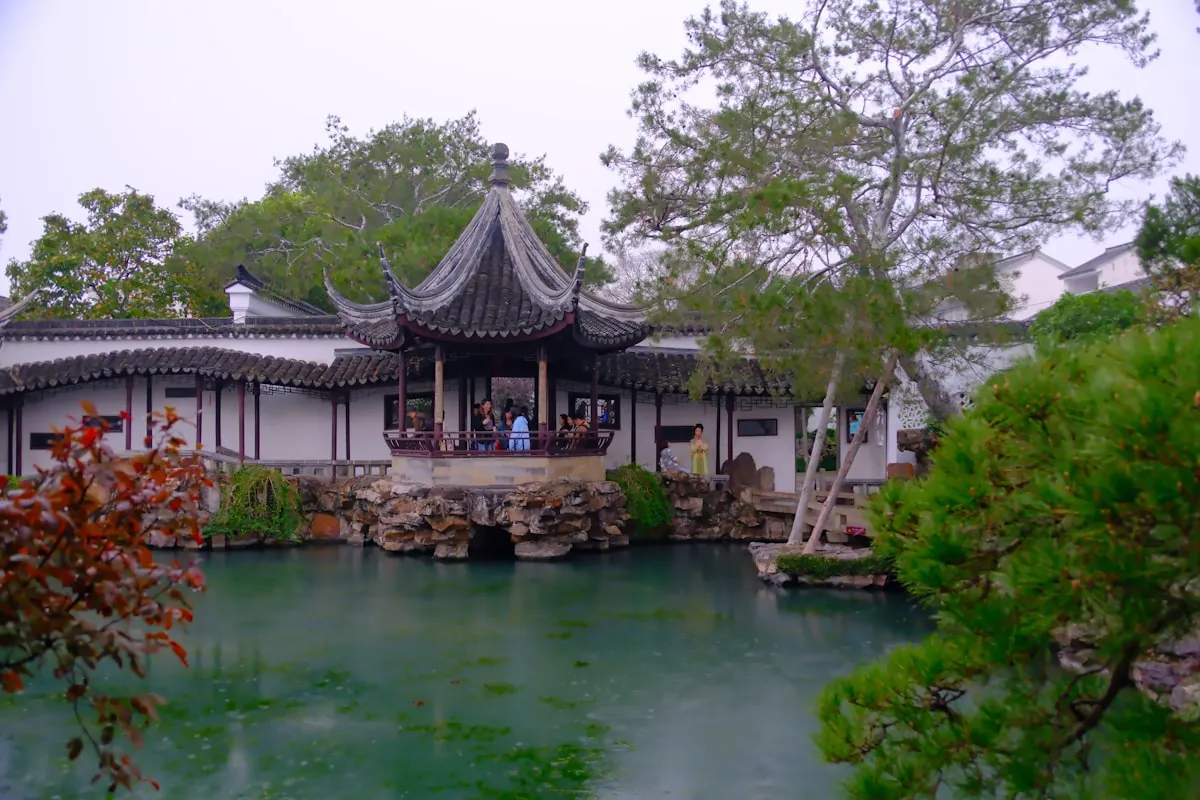
Five Phases of Transformation
Not static substances, but dynamic processes governing all change in the universe
五行 (Wǔ Xíng), literally "five movements" or "five phases," is one of the foundational frameworks of Chinese philosophy. Wu Xing describes dynamic processes of transformation — each "element" represents a phase in the continuous cycle of change governing all phenomena.
Historical Origins
The first systematic presentation of Wu Xing theory emerged during the Warring States period (475-221 BCE). The Shujing (Book of Documents) contains an early enumeration of the five elements. Zou Yan (鄒衍), c. 305-240 BCE, of the School of Naturalists (陰陽家) developed the theory into a comprehensive cosmological framework, applying it to the succession of dynasties and the structure of the cosmos. By the Han Dynasty, Wu Xing was integrated into medicine, politics, music, astronomy, and every domain of Chinese intellectual life.
The Five Elements
The Generating Cycle (相生)
Each element nourishes and gives rise to the next in a continuous cycle of creation — the "mother-child" relationship:
- Wood feeds Fire — wood burns to create flame
- Fire creates Earth — fire produces ash, which becomes soil
- Earth bears Metal — minerals and ores form within the earth
- Metal collects Water — metal surfaces condense moisture
- Water nourishes Wood — water is essential for plant growth
The Overcoming Cycle (相克)
Each element restrains and controls another, maintaining balance through regulation:
- Wood penetrates Earth — roots break through soil
- Earth dams Water — levees contain floods
- Water extinguishes Fire — water quenches flame
- Fire melts Metal — the forge transforms ore
- Metal chops Wood — the axe fells the tree
Both cycles are essential. Without the generating cycle, nothing would grow. Without the overcoming cycle, growth would be unchecked. Together they model the dynamic equilibrium that governs all natural systems.
Wu Xing in Chinese Medicine
Huangdi Neijing (黃帝內經)
The Yellow Emperor's Classic maps five elements to organ systems, emotions, tastes, tissues, and sense organs. Wood governs liver/gallbladder (anger, sour). Fire governs heart (joy, bitter). This framework has guided Chinese medical diagnosis for over two millennia.
Wu Xing in BaZi
- Fundamental building blocks of chart analysis
- Each Heavenly Stem carries an element
- Earthly Branches contain hidden elements
- 12 animals + 5 elements = 60-year cycle
Wu Xing in Feng Shui
- North = Water, South = Fire, East = Wood
- West = Metal, Centre = Earth
- Materials, colours, shapes carry elements
- Adjustments create environmental harmony
Wu Xing in Governance and History
Each dynasty was associated with an element, and its successor represented the conquering element — Qin claimed Water over Zhou's Fire, Han claimed Earth over Qin's Water.
Zou Yan's theory of dynastic succession through the overcoming cycle, intertwined with the Mandate of Heaven (天命)Explore Each Element
Dive deeper into each of the five elements — their correspondences, cycles, and associated zodiac animals.
Frequently Asked Questions
The five elements (Wu Xing) are Wood, Fire, Earth, Metal, and Water. They represent dynamic phases of transformation, not static substances, and describe how energy moves and changes throughout the universe.
The generating cycle (相生): Wood feeds Fire, Fire creates Earth, Earth bears Metal, Metal collects Water, Water nourishes Wood. Each element nurtures the next in a productive 'mother-child' relationship.
Each zodiac year combines an animal with an element through the Heavenly Stems. This creates 60 unique year types in the sexagenary cycle (12 animals x 5 elements). The element modifies the animal's character — a Water Rat differs significantly from a Fire Rat.
No. Western elements (earth, water, air, fire) were conceived as fundamental building-block substances. Wu Xing are dynamic phases — processes rather than materials — embedded in cyclical relationships. The Chinese system has no 'air' element; Metal and Wood have no Western equivalents.
Each element maps to organ pairs, emotions, tastes, seasons, and body tissues. This framework from the Huangdi Neijing guides diagnosis: a liver condition (Wood) might be treated by strengthening its mother (Water) or calming its controller (Metal).
Discussion
Sign in with GitHub to join the conversation.