Introduction to the Chinese Calendar
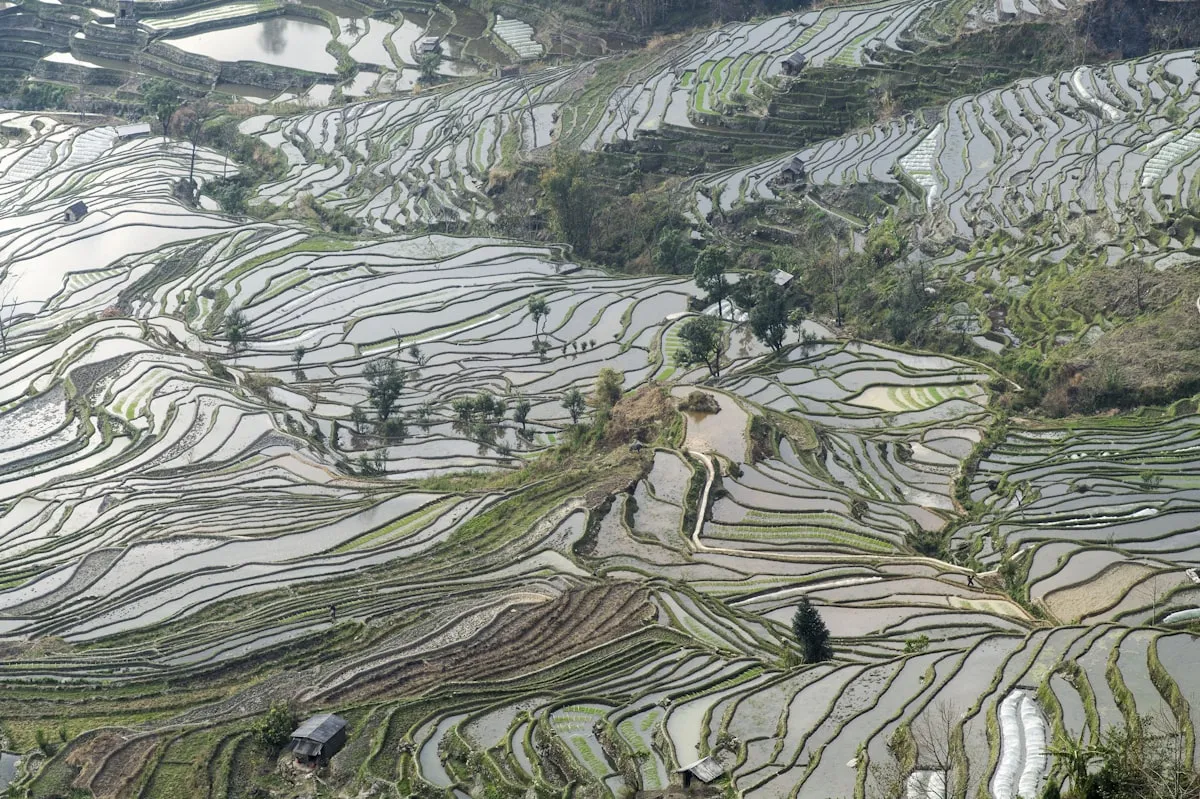
3,000+ Years of Timekeeping
One of the most sophisticated calendar systems in human history
The Chinese calendar is a lunisolar system tracking both moon phases and the sun's position. It incorporates lunar months while using solar markers to stay aligned with the seasons.
Historical Origins
Shang Dynasty — c. 1600–1046 BCE
Oracle bone inscriptions (甲骨文 ) at Yínxū (殷墟 ) reveal the earliest written calendar notations using the sexagenary cycle to record days. The Heavenly Stems and Earthly Branches system predates the zodiac animals.
Zhou Dynasty — 1046–256 BCE
Calendar sophistication grows to predict eclipses and track celestial bodies. The right to promulgate the calendar becomes an imperial prerogative — symbolising the mandate to order time itself.
Emperor Wu of Han — 104 BCE
The Tàichū (太初 ) reform fixes the new year to the first lunar month — the convention that persists today as the basis for Chinese New Year.
Yellow River Civilisation and the Calendar's Birthplace
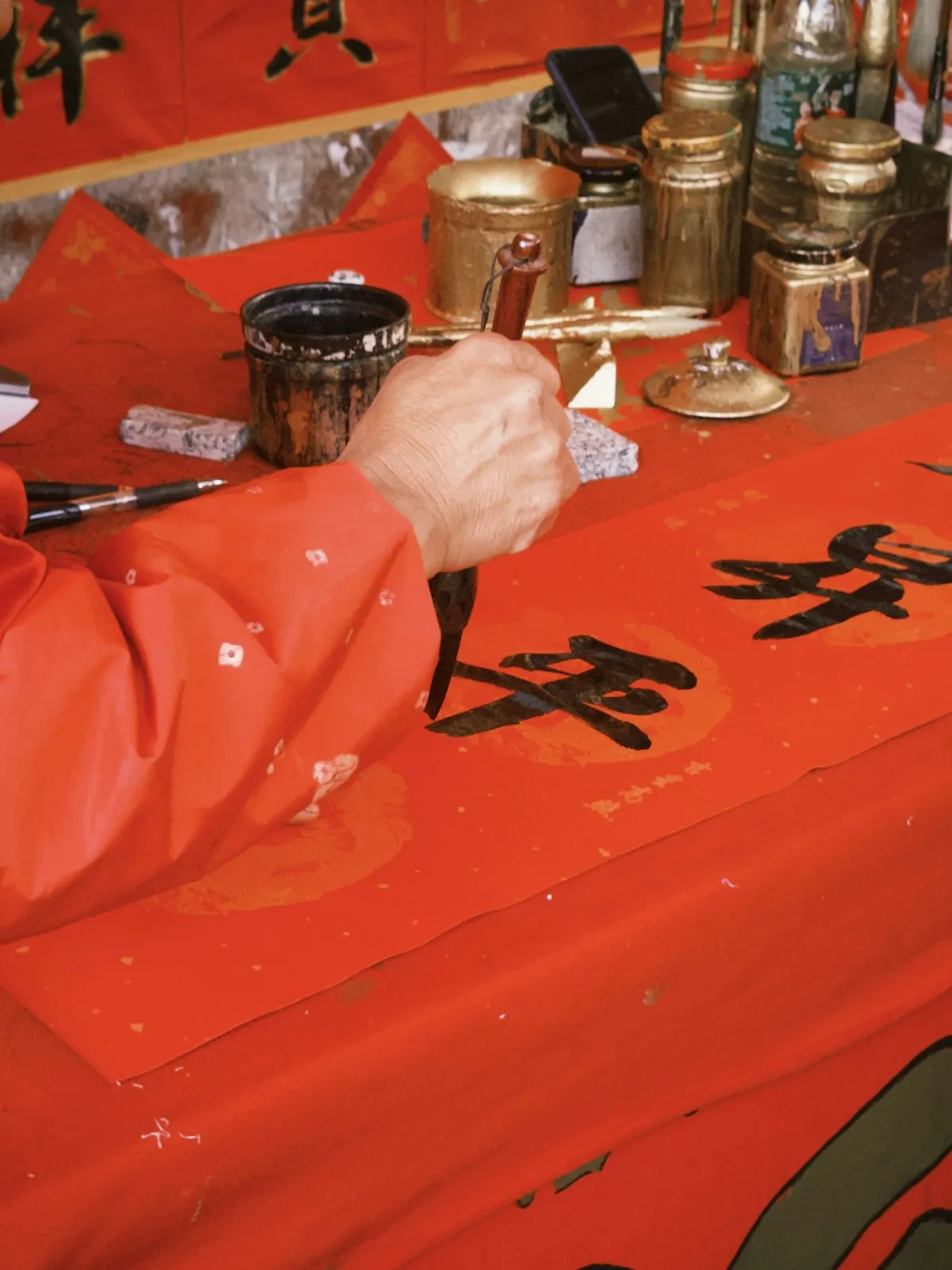
The Yellow River — Cradle of Chinese Timekeeping
The calendar's structure is embedded in the climate and agriculture of the Central Plains
The Chinese lunisolar calendar is a product of the Yellow River (黃河 ) Central Plains (中原 ) millet-farming civilisation. The 24 Solar Terms are calibrated to this temperate monsoon climate (34–38°N latitude) — terms like 大雪 (Major Snow) and 霜降 (Frost Descent) describe phenomena that only exist in northern temperate regions.
Taosi Observatory — World's Earliest Large-Scale Astronomical Site
The Taosi site (陶寺 ) in Shanxi (c. 2300–1900 BCE) contains a semi-circular rammed-earth observatory with slits aligned to solstice and equinox sunrise positions. It also yielded a gnomon (圭表 ) — a shadow-measuring pole that remained the foundation of Chinese astronomical measurement for three millennia.
Evolution of the Calendar: From Oracle Bones to the Shoushi System
The Chinese calendar was not invented once and frozen in time. Over more than three millennia, successive dynasties commissioned astronomers to reform the calendar — correcting accumulated errors, incorporating new observations, and refining computational methods. Over 100 official calendars were promulgated across Chinese history. Each reform represented the state of astronomical knowledge of its era, and the right to promulgate the calendar was an imperial prerogative symbolising the mandate to order time itself.
The Legendary Origins and the Xia Almanac
司馬遷 ’s Shiji (史記, Records of the Grand Historian, c. 94 BCE) attributes the establishment of the calendar to the 黃帝 (Yellow Emperor), though this is legendary rather than historical. The oldest text claimed to preserve Xia-period calendrical knowledge is the Xia Xiaozheng (夏小正 , “Minor Almanac of the Xia”), transmitted within the Da Dai Liji (大戴禮記). It characterises months by which constellations are visible at dusk, the direction of the Northern Dipper’s handle, and seasonal agricultural tasks — but contains no computational astronomy.
Shang Dynasty — The First Written Calendar (c. 1600–1046 BCE)
The oracle bone inscriptions from 殷墟 provide the earliest directly attested calendar in China. The Shang calendar used the sexagenary cycle to record days, organised time into ten-day 旬 weeks based on the Heavenly Stems, and alternated months of 29 and 30 days. A year contained 12 to 14 months, with intercalary months placed at the year’s end. Eclipse observations and nova records appear alongside calendar notations. The Shang new year fell on the first day of the twelfth month of the later Xia system — the month following the winter solstice.
Zhou Dynasty and the Six Ancient Calendars (1046–256 BCE)
The Zhou period saw the calendar develop from a practical agricultural tool into a sophisticated astronomical system. The Zhou Bi Suanjing (周髀算經 ), one of the oldest Chinese mathematical-astronomical texts, describes the gnomon (圭表 ) method for measuring the sun’s shadow and discusses the gaitian (蓋天, “heavenly lid”) cosmological model.
During the Warring States period, competing states maintained their own calendars. These are collectively known as the “Six Ancient Calendars” (古六曆 ):
| Calendar | Chinese | Associated State | New Year |
|---|---|---|---|
| Huangdi | 黃帝曆 | Legendary | — |
| Zhuanxu | 顓頊曆 | Qin | New moon nearest winter solstice |
| Xia | 夏曆 | Jin | New moon nearest spring equinox |
| Yin (Shang) | 殷曆 | Song | New moon after winter solstice |
| Zhou | 周曆 | Zhou | New moon before winter solstice |
| Lu | 魯曆 | Lu | — |
All six are “quarter-remainder calendars” (四分曆 ) calculating the year as 365¼ days. The astronomers 甘德 and 石申 (both c. 4th century BCE) produced the earliest known star catalogues, recording positions for 121 stars across the 28 lunar mansions (二十八宿 ). The 19-year Metonic cycle (7 intercalary months in 19 years) was established during this period.
Qin Unification — The Zhuanxu Calendar (221–206 BCE)
The Qin empire adopted the 顓頊曆 empire-wide. Under this system, the year began in the tenth month (roughly November), with the intercalary month placed at the year’s end as “the second ninth month” (後九月 ). The early Han dynasty inherited this calendar.
The Taichu Reform — Foundation of the Modern Calendar (104 BCE)
The Most Important Calendar Reform in Chinese History
The Taichu Calendar (太初曆 ) of 104 BCE established conventions that persist to this day: the first lunar month as the start of the year, the 24 Solar Terms as a formal structural element, and flexible intercalary month placement based on the absence of a major solar term.
Commissioned by 漢武帝 (Emperor Wu of Han), the reform was carried out by the astronomers 落下閎 (156–87 BCE) and 鄧平 , with 司馬遷 contributing to the project. The Taichu Calendar defined the solar year as 365.2502 days and the synodic month as 29.53086 days. It achieved remarkable accuracy in planetary calculations — Mercury’s synodic period was measured at 115.87 days (modern value: 115.88 days) — and established a 135-month eclipse cycle. It is the oldest Chinese calendar whose computational data survive in full, preserved in the Shiji and the Hanshu (漢書 ).
Later Han astronomers continued to advance the field. 賈逵 (30–101 CE) observed that the winter solstice point had shifted against the fixed stars — an early recognition of the precession of the equinoxes (歲差 ). 劉洪 ’s Qianxiang Calendar (乾象曆 ) was the first to correctly model the Moon’s varying orbital velocity and calculate the “true new moon” (定朔 ). 張衡 (78–139 CE) invented a water-driven armillary sphere and described the cosmos as “the sky is round like a pill, the earth like the yolk of an egg.”
Zu Chongzhi’s Daming Calendar — Precession Enters the Calendar (462 CE)
Zu Chongzhi distinguished between the sidereal year (恒星年 ) and the tropical year (回歸年 ) and calculated the tropical year at 365.24281 days (modern value: 365.24220 — extraordinarily close). His draconic month measurement of 27.21223 days differs from the modern value by only one ten-thousandth of a day. He successfully predicted eclipses four times over 23 years. Zu Chongzhi is also celebrated for calculating π as between 3.1415926 and 3.1415927, a precision record unsurpassed for nearly 900 years.
Sui Reunification and the Interpolation Breakthrough (581–618 CE)
After centuries of division, the Sui dynasty reunified China and its calendar. The most significant intellectual contribution came from 劉焯 (544–610 CE), whose Huangji Calendar (皇極曆 ) applied equal-interval second-order difference interpolation to model the irregular motions of the Sun and Moon — a mathematical method that became a distinctive feature of Chinese computational astronomy. Although never officially adopted, it profoundly influenced the Tang calendars that followed.
Tang Dynasty — Yi Xing and the Dayan Calendar (727 CE)
The First Meridian Survey in World History
一行 (683–727 CE, born 張遂 ), a Buddhist monk and polymath, directed measurements at four stations across Henan province that disproved the ancient claim that the gnomon shadow changed by one cun per thousand li, establishing that one degree of latitude corresponded to approximately 351 li.
Yi Xing’s Dayan Calendar (大衍曆 , completed 727 CE) introduced several breakthroughs. He compiled a solar motion table using the Dingqi method (定氣 ), calculating each solar term by the sun’s actual ecliptic longitude at 15° intervals rather than dividing the year into equal time segments. He invented unequal-interval second-order and third-order difference interpolation to handle the non-uniform motions of celestial bodies. The Dayan Calendar’s organisational structure — dividing all computations into seven major sections — became the model for all subsequent Chinese calendars.
Earlier in the Tang, 李淳風 (602–670 CE) had produced the Linde Calendar (麟德曆 , 665 CE), which was the first to apply the “true new moon” method (定朔法 ) to the everyday calendar (rather than only for eclipse prediction) and which abolished the ancient intercalary cycle in favour of observation-based methods.
Song Dynasty — Refinement and Innovation (960–1279 CE)
The Song dynasty saw more than 18 official calendars in its 300-year span, reflecting an era of intense astronomical activity. 沈括 (1031–1094 CE), in his Dream Pool Essays (夢溪筆談 ), proposed a radical Twelve-Qi Calendar (十二氣曆 ) — essentially a pure solar calendar with 立春 as New Year’s Day, dispensing with intercalary months entirely. Though never adopted, it anticipated the logic of the Gregorian system.
蘇頌 constructed the celebrated water-powered astronomical clock tower (水運儀象臺 ) in 1092 CE, with over 150 mechanical components and armillary instruments — a forerunner of the modern planetarium. 楊忠輔 ’s Tongtian Calendar (統天曆 , 1199 CE) determined the tropical year as 365.2425 days — identical to the average Gregorian year, established 383 years before the Gregorian reform of 1582. Yang also proposed that the tropical year’s length changes over centuries, with ancient values being longer.
Guo Shoujing and the Shoushi Calendar — The Pinnacle (1281 CE)
Commissioned under the Yuan dynasty, the Shoushi Calendar was the product of five years of intensive work (1276–1280) by a team assembled from both the Jin and Song astronomical bureaus. Guo Shoujing designed revolutionary instruments: the Simplified Instrument (簡儀 ), which reformed the armillary sphere and led the world for over 300 years; a 40-foot High Gnomon (高表 ) that reduced measurement error to one-fifth; and the Zenith Instrument (仰儀 ) using pinhole projection.
The team established 27 observation stations spanning from the South China Sea (15°N) to the Bohai region (65°N) — an unprecedented national survey. The calendar adopted a tropical year of 365.2425 days and employed triple interpolation (三次內插法 ) for solar and lunar motion calculations, together with an arc-chord method akin to spherical trigonometry.
Ming Dynasty — The Datong Calendar and the Jesuit Encounter (1368–1644 CE)
The Ming dynasty adopted the Shoushi Calendar largely unchanged, renaming it the Datong Calendar (大統曆 ). Minor adjustments were made — sunrise times recalculated for Nanjing, the epoch reset to 1384 — but the computational methods remained identical. This calendar served the Ming for its entire 276-year duration.
By the late 16th century, accumulated errors had become noticeable. In 1629, 徐光啟 (1562–1633) was appointed to lead a calendar reform project, assisted by Jesuit missionaries who introduced concepts from Copernicus, Kepler, and Tycho Brahe. The resulting Chongzhen Calendar was completed but not issued before the fall of the Ming in 1644.
Summary of Major Calendar Reforms
| Calendar | Chinese | Date | Astronomer(s) | Key Innovation |
|---|---|---|---|---|
| Taichu | 太初曆 | 104 BCE | Luoxia Hong, Deng Ping | First-month new year; 24 solar terms formalised; flexible intercalation |
| Sifen | 四分曆 | 85 CE | Jia Kui | Ecliptic-based calculations; precession observed |
| Qianxiang | 乾象曆 | Late Han | Liu Hong | True new moon calculation; Moon’s varying velocity |
| Daming | 大明曆 | 462 CE | Zu Chongzhi | Precession incorporated; sidereal vs. tropical year |
| Huangji | 皇極曆 | c. 600 CE | Liu Zhuo | Second-order interpolation for Sun/Moon motion |
| Linde | 麟德曆 | 665 CE | Li Chunfeng | True new moon in everyday calendar; intercalary cycle abolished |
| Dayan | 大衍曆 | 727 CE | Yi Xing | Dingqi method; first meridian survey; third-order interpolation |
| Tongtian | 統天曆 | 1199 CE | Yang Zhongfu | Tropical year = 365.2425 days (Gregorian value, 383 years earlier) |
| Shoushi | 授時曆 | 1281 CE | Guo Shoujing, Wang Xun | Triple interpolation; 27-station survey; simplified instruments |
| Datong | 大統曆 | 1368 CE | (Ming adoption) | Shoushi renamed; minor adjustments; used until 1644 |
“The art of the calendar is the highest expression of knowledge.”
— 曆數之學,大學之道, Shiji (Records of the Grand Historian), chapter 26Heavenly Stems (天干 )
Earthly Branches (地支 )
The twelve Earthly Branches map to zodiac animals, two-hour periods (時辰 ), compass directions, and months:
23:00–01:00 · 11th month · N
01:00–03:00 · 12th month · NNE
03:00–05:00 · 1st month · ENE
05:00–07:00 · 2nd month · E
07:00–09:00 · 3rd month · ESE
09:00–11:00 · 4th month · SSE
11:00–13:00 · 5th month · S
13:00–15:00 · 6th month · SSW
15:00–17:00 · 7th month · WSW
17:00–19:00 · 8th month · W
19:00–21:00 · 9th month · WNW
21:00–23:00 · 10th month · NNW
The Sexagenary Cycle (六十干支 )
First Combination
Jiǎzǐ (甲子 ) — Yang Wood Rat. The cycle opens with this combination and is sometimes called the "Jiazi cycle."
2026 Example
Bǐngwǔ (丙午 ) — Yang Fire Horse. The 43rd combination, basis for BaZi year pillar calculations.
Lunisolar Mechanics
The Chinese calendar is neither purely lunar nor purely solar — it is a lunisolar (陰陽合曆 ) system that weaves both together. Think of it as two clocks running simultaneously: one tracks the moon, the other tracks the sun. Together they produce a calendar that stays aligned with both celestial cycles and the seasons.
Lunar Component (陰曆 )
Each month begins on a new moon (the day the moon is invisible) and lasts until the next new moon — either 29 days (a “short month,” 小月 ) or 30 days (a “long month,” 大月 ). The mid-month full moon falls around the 15th, which is why the Mid-Autumn Festival (中秋節 ) is always on the 15th of the 8th month — the moon is guaranteed to be full.
Twelve lunar months total only about 354 days, which is roughly 11 days shorter than the solar year. Without correction, the calendar would drift: after just three years, the “first month of spring” would arrive in mid-winter. The solution is the intercalary month (閏月 ): approximately 7 times every 19 years (the Metonic cycle), an extra month is inserted to resynchronise the calendar with the seasons.
Solar Component (陽曆 )
The 24 Solar Terms (節氣 ) divide the sun’s annual journey along the ecliptic into 24 segments of approximately 15 days each. Unlike the lunar months, these are tied directly to the sun’s position — so Lìchūn (立春 , Start of Spring) always falls around February 4, and the Winter Solstice (冬至 ) always falls around December 22, regardless of which lunar month it is.
The Solar Terms serve as the “anchor” that prevents the lunar months from drifting. The rule is elegant: if a lunar month contains no Qì (中氣 , major solar term), it becomes the intercalary month. For example, in 2025 there is a leap sixth month (閏六月 ) because the extra lunar month between the 6th and 7th months lacks a major solar term.
A Practical Example: Why Does Chinese New Year Move?
Chinese New Year falls on the second new moon after the Winter Solstice. Since lunar months don’t perfectly align with the solar year, the date shifts between January 21 and February 20 on the Gregorian calendar. In 2025, Chinese New Year was on January 29; in 2026 it falls on February 17. The solar anchor (Winter Solstice) keeps the range bounded — without it, the new year would drift through all seasons like the Islamic Ramadan does.
Gregorian vs. Chinese Calendar — A Quick Comparison
| Feature | Gregorian (Western) | Chinese Lunisolar |
|---|---|---|
| Basis | Solar only | Lunar months + Solar terms |
| Month length | 28–31 days (arbitrary) | 29–30 days (tied to moon phases) |
| Year length | 365 or 366 days | 353–355 days (ordinary) or 383–385 days (leap year) |
| Leap correction | 1 extra day every 4 years | 1 extra month ~7 times per 19 years |
| Full moon | Irregular dates | Always around the 15th of each month |
| Seasonal alignment | Fixed by design | Maintained by the 24 Solar Terms |
What’s in a Name? The Naming History of the Chinese Calendar
For thousands of years, the Chinese calendar needed no special name — it was simply the calendar (曆 ). Each dynasty gave its official calendar a specific title — the Taichu Calendar, the Shoushi Calendar, the Datong Calendar — but no generic label was necessary because no competing system existed in daily life. That changed abruptly in 1912, and the naming confusion that followed persists to this day.
Before 1912: Every Calendar Had Its Own Name
In imperial China, the right to promulgate the calendar was an exclusive imperial prerogative. The physical almanac distributed to the public was called 皇曆 (“imperial calendar”) because it was issued under imperial authority, or 黃曆 (“yellow calendar”) after the colour of its cover. Popular annotated almanacs with divinatory content were called 通書 . These names described the calendar’s authority or format, never its type — because no competing system required differentiation.
| Period | Calendar | Chinese | Duration |
|---|---|---|---|
| Han | Taichu Calendar | 太初曆 | 104 BCE – 85 CE |
| Yuan | Shoushi Calendar | 授時曆 | 1281 – 1644 |
| Ming | Datong Calendar | 大統曆 | 1368 – 1644 |
| Qing | Shixian Calendar | 時憲曆 | 1645 – 1913 |
1912: Two Calendars, Two Names Required
On 2 January 1912, 孫中山 (Sun Yat-sen), provisional president of the newly founded Republic of China, decreed the adoption of the Gregorian calendar for official use. For the first time in Chinese history, two calendar systems coexisted — and both needed names to tell them apart.
The Gregorian calendar acquired several labels: 陽曆 (“solar calendar”), 新曆 (“new calendar”), 西曆 (“Western calendar”), 公曆 (“common calendar”), and in Taiwan 國曆 (“national calendar”). The traditional lunisolar calendar, meanwhile, was retroactively labelled with a grab-bag of informal names: 舊曆 (“old calendar”), 陰曆 (“lunar calendar”), and eventually 農曆 (“agricultural calendar”).
The Attempt to Ban the Old Calendar
The Nationalist Government went further than merely renaming. In 1928, Chiang Kai-shek formally abolished the traditional calendar, banned the printing of lunar-solar parallel calendars, and forbade Spring Festival celebrations. Government officials caught exchanging New Year greetings during the lunar new year faced punishment. The ban proved unenforceable — rural populations and urban residents alike continued to celebrate covertly — and was quietly repealed in 1934.
農曆 — The “Agricultural Calendar”
The term 農曆 is not an ancient name. It gained official status in 1947 when the Republic of China government rebranded the traditional calendar to emphasise its agricultural function. After 1949, the People’s Republic of China retained the term, and in 2017 standardised it in national standard GB/T 33661-2017 (《農曆的編算和頒行》). The earliest documented use in a publication title is the Zhejiang Agricultural Advancement Society’s 農家曆 (“Farmer’s Calendar”) of 1922.
The name carries an irony: the agricultural component of the Chinese calendar — the 24 Solar Terms that guide farming — is actually the solar component, not the lunar one. The months (which are lunar) have no particular agricultural significance. Calling the entire system the “agricultural calendar” is like naming a bicycle after only one of its wheels.
陰曆 — The Misleading “Lunar Calendar”
The colloquial habit of calling the Chinese calendar 陰曆 probably arose because the most visible feature — months beginning on the new moon, festivals falling on the 15th (full moon) — is lunar. But this is a fundamental misclassification. A true lunar calendar, such as the Islamic Hijri calendar, tracks only the moon. It has no intercalary correction and drifts through the seasons: Ramadan can fall in summer one decade and winter the next. The Chinese calendar, by contrast, uses the 24 Solar Terms and intercalary months precisely to prevent this drift. Its dual nature — lunar months anchored by solar terms — is its defining characteristic.
“Lunar Calendar” in English — A Mistranslation of a Misnomer
The English term “lunar calendar” for the Chinese system is a direct translation of the already-imprecise 陰曆. It compounds the error by stripping away the context that Chinese speakers at least implicitly understand — that 陰曆 is shorthand, not a technical description. In English, “lunar calendar” is taken at face value, leading to the widespread but incorrect belief that the Chinese calendar is a purely lunar system.
The correct English term is lunisolar calendar. The Chinese calendar shares this classification with the Hebrew calendar, the Hindu calendar, and the traditional Korean and Vietnamese calendars (which are historically derived from Chinese models). The Islamic Hijri calendar is the world’s most widely used true lunar calendar.
The “Lunar New Year” Controversy
Since 2012, the South Korean civic organisation VANK has campaigned to replace “Chinese New Year” with “Lunar New Year” in English-language media and international organisations, arguing that the holiday is shared across East Asia and should not bear China’s name. The campaign has been successful with several Western brands and media outlets. However, the term “Lunar New Year” is astronomically incorrect — the Chinese calendar is lunisolar, not lunar — and it erases the Chinese origin of the calendar system from which the holiday derives. This site uses “Chinese New Year” or “Spring Festival” (春節 ).
A Guide to the Names
| Name | Chinese | Literal Meaning | Refers To | Accuracy |
|---|---|---|---|---|
| 農曆 | Agricultural calendar | Traditional Chinese calendar | Imprecise — the “agricultural” parts are solar | |
| 陰曆 | Lunar calendar | Traditional Chinese calendar (colloquial) | Misleading — the calendar is lunisolar, not lunar | |
| 陰陽合曆 | Lunisolar calendar | The technical classification | Correct | |
| 舊曆 | Old calendar | Traditional Chinese calendar (informal) | Relative label, not descriptive | |
| 夏曆 | Xia calendar | Traditional calendar (astronomical contexts) | Historically loaded — attributes the system to the legendary Xia dynasty | |
| 黃曆 | Yellow (Emperor’s) calendar / almanac | Traditional almanac with auspicious dates | Refers to the almanac, not the calendar system itself | |
| 公曆 | Common calendar | Gregorian calendar | Standard PRC term for Gregorian | |
| 陽曆 | Solar calendar | Gregorian calendar (colloquial) | Correct in principle — the Gregorian is solar | |
| 國曆 | National calendar | Gregorian calendar (Taiwan) | Jurisdiction-specific label |
“Use the [traditional] calendar for farming, and use the Gregorian calendar for counting and classification.”
— 孫中山 Sun Yat-sen, 1912 decree on calendar adoption“Before 1912, there was no need for the term ‘agricultural calendar’ — the traditional calendar was simply the calendar.”
— Zhu Wenzhe (朱文哲), “Western Calendar, National Calendar, Gregorian Calendar: The ‘Rectification of Names’ of Calendars in Modern China,” Shilin (史林), 2019The 24 Solar Terms (二十四節氣 )
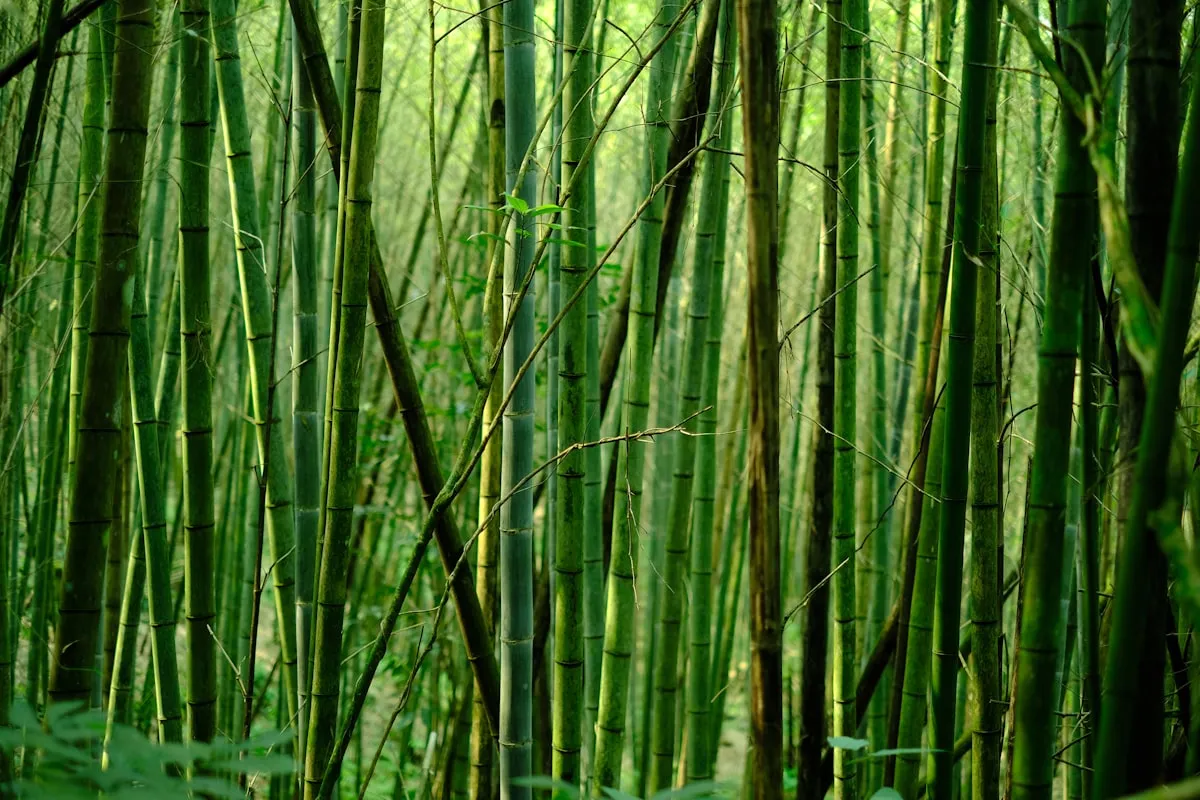
24 Markers of the Sun's Path
UNESCO Intangible Cultural Heritage since 2016
Historical Development
Western Zhou (c. 1046–771 BCE)
Four cardinal terms established: two solstices (冬至 , 夏至 ) and two equinoxes (春分 , 秋分 ).
Spring and Autumn (770–476 BCE)
Expanded to 8 terms with the four seasonal beginnings (立春 , 立夏 , 立秋 , 立冬 ).
Huainanzi (c. 139 BCE)
Complete 24-term system canonically described. The Northern Dipper's annual rotation marks each term in sequence.
Yi Xing — 729 CE
Introduced Dìngqì (true solar position) method, calculating each term by the sun's actual ecliptic longitude at 15° intervals.
Guo Shoujing — 1281 CE
The Shoushi Calendar fully adopted Dìngqì. Measured the tropical year at 365.2425 days — matching the Gregorian value 300 years earlier.
Jié vs. Qì
Jié (節 ) — Nodes
12 terms marking seasonal transitions and the beginning of each lunar month. Serve as boundary markers.
Qì (氣 ) — Breaths
12 mid-month terms indicating peak seasonal characteristics. A month lacking a Qì becomes the intercalary month.
Complete Reference Table
| Term | Chinese | Approx. Date | Type | Significance |
|---|---|---|---|---|
| Lìchūn | 立春 | Feb 4 | Jié | Start of Spring — Beginning of the agricultural year. The Yueling prescribes the emperor to ceremonially plough the first furrow. |
| Yǔshuǐ | 雨水 | Feb 19 | Qì | Rain Water — Snow gives way to rain; ice thaws. Fields must be prepared for spring sowing. |
| Jīngzhé | 驚蟄 | Mar 6 | Jié | Awakening of Insects — Spring thunder rouses dormant creatures. Originally called 啟蟄 in the Han Dynasty, renamed to avoid Emperor Jing's name taboo. |
| Chūnfēn | 春分 | Mar 21 | Qì | Spring Equinox — Day and night of equal length. In the Zhou tradition, altars to the sun were tended on this date. |
| Qīngmíng | 清明 | Apr 5 | Jié | Clear and Bright — Ancestral tomb-sweeping festival. Customs documented as early as the Zuǒzhuàn (左傳 ), a Spring and Autumn period text. |
| Gǔyǔ | 穀雨 | Apr 20 | Qì | Grain Rain — Last spring rains nourish newly planted crops. Associated with the legend of Cang Jie's invention of writing. |
| Lìxià | 立夏 | May 6 | Jié | Start of Summer — Crops enter rapid growth. The Yueling records the emperor offering prayers to the God of the Stove. |
| Xiǎomǎn | 小滿 | May 21 | Qì | Grain Buds — Grains begin to plump but are not yet ripe. Silkworms enter the cocoon-spinning stage. |
| Mángzhòng | 芒種 | Jun 6 | Jié | Grain in Ear — Wheat is harvested, rice transplanted. The busiest period in the traditional farming calendar. |
| Xiàzhì | 夏至 | Jun 21 | Qì | Summer Solstice — Longest day of the year. Among the earliest terms identified, confirmed by gnomon shadow measurements on Shang-era oracle bones. |
| Xiǎoshǔ | 小暑 | Jul 7 | Jié | Minor Heat — Heat intensifies. The custom of “drying books” (曬書 ) to prevent mildew dates to the Han Dynasty. |
| Dàshǔ | 大暑 | Jul 23 | Qì | Major Heat — Hottest period. The Liji describes seasonal adjustments to diet, favouring cooling foods and bitter herbs. |
| Lìqiū | 立秋 | Aug 7 | Jié | Start of Autumn — First hints of autumn. The emperor made offerings in the western suburbs to welcome the season of harvest. |
| Chǔshǔ | 處暑 | Aug 23 | Qì | End of Heat — Summer heat dissipates. Grain drying and storage begin. The Nongzheng Quanshu notes this as the deadline for late rice planting. |
| Báilù | 白露 | Sep 8 | Jié | White Dew — Morning dew appears. The Shījīng (詩經 , Book of Songs) contains the famous verse: “White dew turns to frost” (白露為霜 ). |
| Qiūfēn | 秋分 | Sep 23 | Qì | Autumn Equinox — Second equal day and night. Moon worship ceremonies were held, a precursor to the Mid-Autumn Festival. |
| Hánlù | 寒露 | Oct 8 | Jié | Cold Dew — Dew becomes cold. Chrysanthemum wine (菊花酒 ) is brewed, a custom recorded in the Han-era Xījīng Zájì (西京雜記 ). |
| Shuāngjiàng | 霜降 | Oct 23 | Qì | Frost Descent — First frost appears. Persimmons are harvested and Chinese medicinal herbs are gathered. Military reviews were traditionally held. |
| Lìdōng | 立冬 | Nov 7 | Jié | Start of Winter — Harvest complete, fields at rest. The emperor offered winter sacrifices. The Yueling prescribes sealing granaries and repairing city walls. |
| Xiǎoxuě | 小雪 | Nov 22 | Qì | Minor Snow — Light snowfall begins in the north. Pickling vegetables and curing meats for winter storage commences. |
| Dàxuě | 大雪 | Dec 7 | Jié | Major Snow — Heavy snowfall. Rivers freeze. The custom of “sealing the plough” (封犁 ) marked the end of the farming year. |
| Dōngzhì | 冬至 | Dec 22 | Qì | Winter Solstice — Shortest day. In Zhou and Han times, this was the start of the new year. Grand court ceremonies were held; officials exchanged formal greetings. |
| Xiǎohán | 小寒 | Jan 6 | Jié | Minor Cold — Cold intensifies. The “Nine Nines” counting custom (數九 ) begins from the Winter Solstice, tracking 81 days until spring. |
| Dàhán | 大寒 | Jan 20 | Qì | Major Cold — Coldest period. Spring Festival preparations commence. The cycle completes and returns to Lìchūn. |
Five Elements & Agricultural Wisdom
Each season of six terms corresponds to a Five Element: Spring/Wood, Summer/Fire, Autumn/Metal, Winter/Water, with Earth governing 18-day transitions. Proverbs like 清明前後,種瓜點豆 ("Around Qingming, plant melons and sow beans") encode generations of empirical knowledge. Xu Guangqi's Ming Dynasty Nongzheng Quanshu (1639) synthesised centuries of regional farming mapped to each term.
The Calendar in Daily Life
For millennia the Chinese calendar governed the rhythm of daily existence. Farmers relied on Solar Terms to determine planting and harvest times. Wedding dates, funerals, business openings, and travel were all selected according to auspicious calendar calculations. The BaZi system draws its four pillars directly from the sexagenary cycle of the birth date and time. Feng shui practitioners use the calendar to calculate Flying Star periods and determine temporal energy shifts.
For an in-depth discussion of the “Chinese New Year” vs. “Lunar New Year” naming debate and its cultural significance, see our sister site ChineseNewYear.wiki.
The Modern Custodian: Purple Mountain Observatory (紫金山天文台 )
The Chinese agricultural calendar (農曆 ) is the only major traditional calendar system in the world that is officially computed and promulgated by a national scientific institution using modern astronomical methods. That institution is the Purple Mountain Observatory (紫金山天文台 ) in Nanjing — and its founding is itself a story of national dignity and scientific determination.
Origins: The 1913 Humiliation
In 1913, Japan organised an "Asian Observatory Directors' Conference" (亞洲觀象台台長會議 ) in Tokyo. China — then in the chaos of the early Republic, with warlordism and political fragmentation — was initially not even invited. Gao Lu (高魯 , 1877–1947), who had studied engineering in Belgium and served as director of the Central Observatory, attended under pressure from Japanese organisers who reluctantly allowed a Chinese delegate. Gao Lu felt deep humiliation: China, with over three millennia of astronomical tradition, had no modern national observatory. Japan, which had historically adopted the Chinese calendar system, now had multiple modern observatories. From that moment, Gao Lu resolved that China must build its own.
Establishment
On November 20, 1927, following Sun Yat-sen's posthumous wishes, the Nationalist government convened the preparatory meeting for the National Central Research Academy (國立中央研究院 , Academia Sinica). Gao Lu formally submitted his proposal: 《建國立第一天文台在南京紫金山》 ("Establish the Nation's First Observatory on Purple Mountain, Nanjing"). After vigorous advocacy, the proposal was approved. The Institute of Astronomy was founded in 1928 as one of Academia Sinica's first eight institutes, with Gao Lu as its first director.
The Purple Mountain Observatory was completed on September 1, 1934, housing a 60cm Carl Zeiss reflecting telescope — the largest in the Far East at the time. It is known as the "Cradle of Modern Astronomy in China" (中國現代天文學的搖籃 ), as nearly every subsequent Chinese astronomical institution was founded from or related to PMO.
Key Figures in Chinese Modern Astronomy
Gao Lu (高魯 , 1877–1947) — First Director (1928–1929), principal advocate for the observatory. Yu Qingsong (余青松 , 1897–1978) — Second Director, oversaw construction. Zhang Yuzhe (張鈺哲 , 1902–1986) — Third Director (1941–1984), asteroid observation pioneer.
Computing the Agricultural Calendar Today
The observatory's most culturally significant role is computing the Chinese agricultural calendar (農曆 ). In May 2017, China issued a formal national standard (GB/T 33661-2017, 《農曆的編算和頒行》 ) establishing the official rules for calendar computation, requiring accuracy to within approximately one second, and designating PMO as the sole authoritative institution.
Why "Lunar Calendar" Is a Misnomer
The Chinese calendar is frequently miscalled a "lunar calendar." This is technically incorrect. A pure lunar calendar — such as the Islamic Hijri calendar — tracks only moon phases, with a year of approximately 354 days that drifts through all seasons over a 33-year cycle. The Chinese calendar is a lunisolar (陰陽合曆 ) system: it integrates lunar months with the 24 Solar Terms, which are entirely solar in nature, anchoring the calendar to the seasons. This is why Chinese New Year always falls between January 21 and February 20 — the solar component prevents drift. The Chinese name 農曆 (, "agricultural calendar") reflects this seasonal dimension. The calendar is no more "lunar" than it is "solar" — it is both, by design.
"The Agricultural Calendar is an integrated lunar-solar calendar (陰陽合曆 ) as it embraces the movement of the moon as well as that of the sun."
— Hong Kong Observatory, official educational materialsFrequently Asked Questions
The sexagenary cycle (六十干支) creates 60 unique combinations from 10 Heavenly Stems and 12 Earthly Branches. It repeats every 60 years and is used to count years, months, days, and hours in traditional Chinese timekeeping. Evidence of its use dates to Shang Dynasty oracle bones (c. 1600 BCE).
Chinese months follow lunar phases, alternating between 29 days (short month, 小月) and 30 days (long month, 大月), averaging 29.53 days per month.
The 24 Solar Terms (二十四節氣) divide the sun's annual ecliptic path into 24 segments of approximately 15 degrees each. The system originated in the Western Zhou period (c. 1046-771 BCE) with four cardinal terms (solstices and equinoxes), expanded to eight during the Spring and Autumn period, and was completed to 24 during the Warring States period. The full system was canonically described in the Huainanzi (c. 139 BCE) and formally incorporated into the state calendar by Emperor Wu of Han in 104 BCE.
The 24 terms alternate between Jié (節, nodes) and Qì (氣, mid-points). Jié mark the beginning of each lunar month and seasonal transitions. Qì fall at the mid-point of each month. A lunar month lacking a Qì was designated as the intercalary month (閏月), an elegant rule that kept the lunisolar calendar aligned with the solar year.
Chinese New Year falls on the second new moon after the winter solstice, placing it between January 21 and February 20. The exact date shifts yearly because the lunisolar calendar must reconcile lunar months with the solar year.
Píngqì (平氣) divides the year into 24 equal time intervals, assuming constant solar motion. Dìngqì (定氣) calculates each term based on the sun's actual ecliptic longitude at 15-degree intervals. The monk-astronomer Yi Xing introduced the Dìngqì concept in 729 CE, and Guo Shoujing fully adopted it in the Shoushi Calendar of 1281.
A purely lunar calendar (like the Islamic Hijri calendar) tracks only moon phases and drifts through the seasons. The Chinese lunisolar calendar also tracks the sun's position through the 24 Solar Terms and uses intercalary months to stay aligned with the seasons.
The Purple Mountain Observatory (紫金山天文台) in Nanjing is the sole official institution responsible for computing and promulgating the Chinese agricultural calendar. In 2017, the Chinese government formalised this in national standard GB/T 33661-2017, requiring calculation accuracy to within approximately one second.
Over 100 official calendars were promulgated across Chinese history. Major milestones include the Taichu Calendar (太初曆, 104 BCE) which established the first-month new year and formalised the 24 Solar Terms; Zu Chongzhi's Daming Calendar (大明曆, 462 CE) which first incorporated precession of the equinoxes; Yi Xing's Dayan Calendar (大衍曆, 727 CE) which introduced true solar position calculations; and Guo Shoujing's Shoushi Calendar (授時曆, 1281 CE) which achieved a tropical year measurement of 365.2425 days — identical to the Gregorian value, 300 years earlier.
The term 農曆 (nónglì, 'agricultural calendar') is a 20th-century retronym. Before 1912, the traditional calendar needed no generic label because it was the only calendar in use — each dynasty simply named its calendar (e.g. Taichu Calendar, Shoushi Calendar). When the Republic of China adopted the Gregorian calendar in 1912, retronyms like 舊曆 ('old calendar'), 陰曆 ('lunar calendar'), and 夏曆 ('Xia calendar') emerged. The term 農曆 was formally adopted by the ROC government in 1947 and standardised by the PRC in GB/T 33661-2017.
Before 1912, each dynasty's calendar carried its own specific name — there was no generic term because no competing system existed. The physical almanac was known as 皇曆 (huánglì, 'imperial calendar') or 黃曆 (huánglì, 'yellow calendar'), while popular almanacs were called 通書 (tōngshū). The generic labels we use today — 農曆, 陰曆, 舊曆, 夏曆 — are all retronyms that emerged after 1912.
The Chinese calendar is technically a lunisolar system (陰陽合曆), not a purely lunar one. The colloquial Chinese term 陰曆 ('lunar calendar') caught on because the most visible feature — months starting on the new moon — is lunar. But the calendar also tracks the sun through the 24 Solar Terms and uses intercalary months to stay aligned with the seasons. The English 'lunar calendar' is a direct translation of this already-imprecise Chinese shorthand. The official term 農曆 ('agricultural calendar') only gained currency after 1912, when the Republic of China adopted the Gregorian calendar and needed a label to distinguish the traditional system.
Discussion
Sign in with GitHub to join the conversation.