Introduction
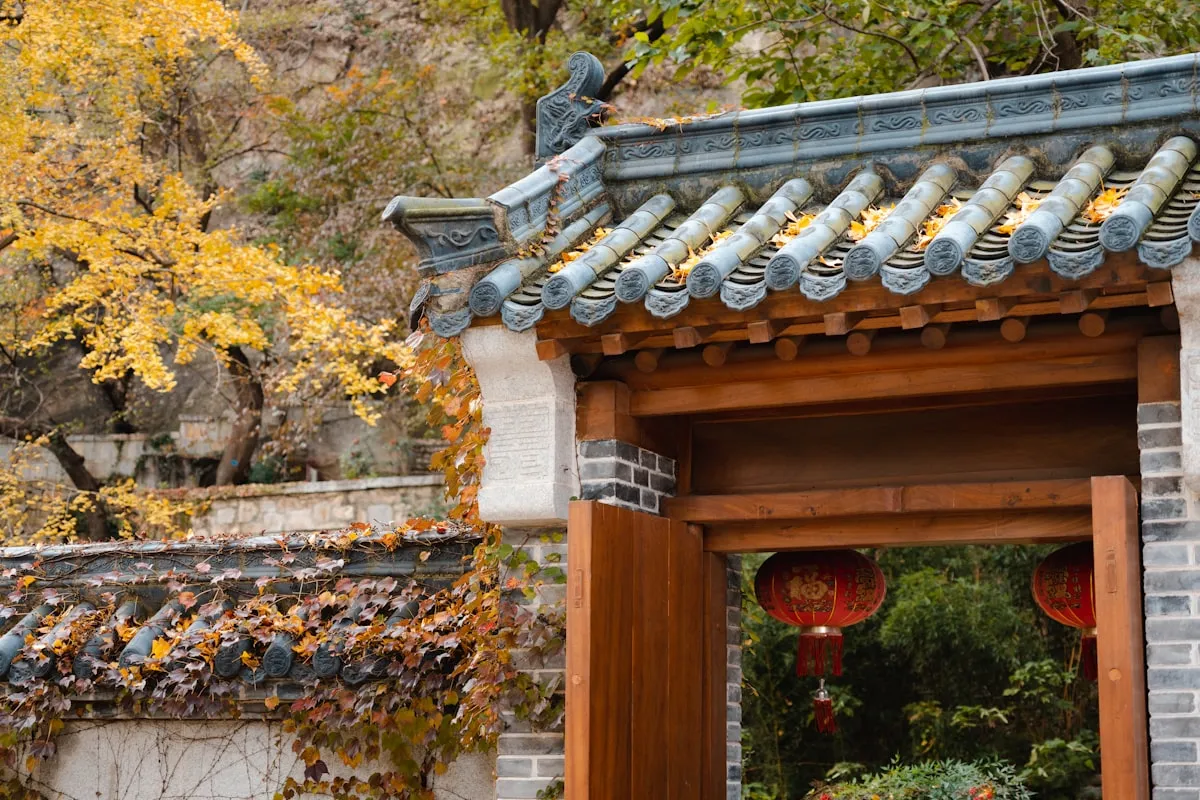
The Way — 道
China's indigenous philosophical and religious tradition, over 2,500 years old
Core Philosophy
道可道,非常道 — "The Way that can be spoken is not the eternal Way."— Opening line of the Daodejing
Classical Texts
Daodejing (道德經, )
The Daodejing (also known as the Laozi) is the foundational text of Taoism — a collection of 81 brief chapters totalling roughly 5,000 characters. Attributed to Laozi (老子, "Old Master"), it was likely compiled during the late Warring States period (4th–3rd century BCE). It addresses the nature of the Dao, the art of governance, and the cultivation of personal wisdom through paradox, metaphor, and poetic compression.
— Laozi, 《道德經》, late Warring States period (4th–3rd century BCE)Key themes include the power of softness over hardness, the danger of excessive knowledge, the superiority of effortless action, and the ruler's ideal of governing so lightly that the people are hardly aware of being governed. The text has been translated into more languages than any other work except the Bible.
Zhuangzi (莊子, )
The Zhuangzi, attributed to Zhuang Zhou (莊周, c. 369–286 BCE), is the second great Taoist classic — and one of the most brilliant works of Chinese literature. Where the Daodejing is terse and enigmatic, the Zhuangzi is expansive, playful, and wildly imaginative.
Its 33 chapters (the "Inner Chapters" are considered most authentic) use stories, dialogues, jokes, and absurdist scenarios to dissolve conventional thinking. The famous butterfly dream — Zhuang Zhou dreams he is a butterfly, then wakes and wonders whether he is a man who dreamed of being a butterfly, or a butterfly now dreaming of being a man — is the most celebrated philosophical thought experiment in Chinese literature.
Liezi (列子, )
The Liezi, attributed to Lie Yukou (列禦寇), is the third major Taoist philosophical text. It contains stories about immortals, the nature of reality, and fate. The famous parable of the "Old Man at the Frontier" (塞翁失馬, ) — "blessings and misfortunes are intertwined" — originates from this text and encapsulates the Taoist view of fortune and adversity.
Baopuzi (抱朴子, )
Written by Ge Hong (葛洪, 283–343 CE) during the Jin Dynasty, the Baopuzi ("Master Who Embraces Simplicity") bridges Taoist philosophy and Taoist religion. Its "Inner Chapters" address alchemy, immortality techniques, talismans, and the cultivation of the elixir of life. Its "Outer Chapters" discuss Confucian ethics and governance. Ge Hong's work is the most important early source for understanding Taoist alchemical practice.
The Eight Immortals (八仙, )
The most beloved figures in Chinese popular mythology — a diverse group representing all of society: old and young, male and female, noble and humble.
"八仙過海,各顯神通"
"The Eight Immortals cross the sea, each displaying their own power." Their diversity — spanning gender, age, class, and physical ability — carries the message that spiritual attainment is available to all, regardless of social position.
Deities and Cosmology
Taoist religion developed an elaborate pantheon that synthesised philosophical Taoism with Chinese folk religion, Buddhist influences, and local deities. The Taoist cosmos is structured as a vast bureaucracy mirroring the Chinese imperial government, with deities occupying specific ranks and administrative functions.
The Three Pure Ones (三清, )
The highest deities in the Taoist pantheon:
- Yuanshi Tianzun (元始天尊, Celestial Worthy of the Primordial Beginning) — Represents the primordial Dao before creation
- Lingbao Tianzun (靈寶天尊, Celestial Worthy of Numinous Treasure) — Represents the Dao's creative activity
- Daode Tianzun (道德天尊, Celestial Worthy of Dao and De) — Often identified with the deified Laozi, represents the Dao's teaching
The Jade Emperor (玉皇大帝, )
The supreme ruler of heaven in popular Chinese religion, governing both gods and humans. The Jade Emperor presides over the celestial bureaucracy and, in the zodiac legend, is credited with establishing the order of the twelve animals. His birthday is celebrated on the ninth day of the first lunar month.
Other Major Deities
- Mazu (媽祖) — Goddess of the sea, protector of sailors and fishermen. Originally a mortal woman from Fujian (Lin Mo, Song Dynasty), she was deified and became one of the most widely worshipped deities in coastal China, Taiwan, and Southeast Asia.
- Guan Di (關帝) — The deified general Guan Yu (關羽) from the Three Kingdoms period. Worshipped as the god of war, loyalty, and righteousness, and also as a protector of business.
- Caishen (財神) — The God of Wealth, especially important during Spring Festival. Multiple figures serve as Caishen in different traditions.
- Tudi Gong (土地公) — The Earth God, a local protective deity found in virtually every Chinese community. Tudi Gong shrines are ubiquitous in rural and urban China, Taiwan, and Southeast Asia.
Classical Myths
Taoist cosmology is rich with creation myths and origin stories that express philosophical principles through narrative:
Pangu Creates the World (盤古開天)
In the beginning, the universe was a formless chaos (混沌, ) shaped like a cosmic egg. Pangu (盤古) grew within for 18,000 years, then separated heaven and earth by pushing them apart — the light, clear qi (清氣) rising to form heaven, and the heavy, turbid qi (濁氣) sinking to form earth. When Pangu died, his body transformed into the natural world: his breath became wind, his voice thunder, his eyes the sun and moon, his blood rivers, his hair forests.
Nüwa Creates Humanity (女媧造人)
The goddess Nüwa (女媧) fashioned the first humans from yellow earth by the banks of the Yellow River. She formed them individually until, growing weary, she dipped a rope in mud and flicked it — the drops becoming common people while her hand-formed figures became nobles. She later repaired the sky when the pillar of heaven collapsed, smelting five-coloured stones to patch the firmament.
Hundun — Primordial Chaos (混沌)
The Zhuangzi tells of Hundun, the Emperor of the Centre, who had no face — no eyes, ears, nostrils, or mouth. His friends, the Emperors of the North and South, decided to repay his hospitality by boring seven holes in him (one per day) so he could see, hear, and eat. On the seventh day, Hundun died. This parable warns that imposing order and differentiation on primordial wholeness destroys its essential nature — a core Taoist insight.
Alchemy — Neidan and Waidan
Taoist alchemy represents one of the most sustained investigations into the nature of matter and spirit in pre-modern civilisation.
External Alchemy (外丹)
Physical preparation of elixirs of immortality from minerals — cinnabar, gold, lead. Ge Hong's Baopuzi (4th c. CE) details the processes. The quest for physical immortality was unsuccessful (several Tang emperors likely died from alchemical preparations), but contributed to chemistry, metallurgy, and the discovery of gunpowder.
Internal Alchemy (內丹)
Dominant from the Song Dynasty. Transforms the three treasures within the body: Jing (精, essence) → Qi (氣, vital energy) → Shen (神, spirit) → the Void. This framework profoundly influenced Chinese medicine, internal martial arts, and qigong.
Taoism and Chinese Culture
Taoism is not merely one tradition among many — it is the philosophical substrate from which the entire edifice of Chinese metaphysics, medicine, and cosmology grows.
Watch & Learn
Explore Daoist philosophy and the Dao De Jing through these videos.
Frequently Asked Questions
There is no difference — they refer to the same tradition. 'Taoism' uses the older Wade-Giles romanisation; 'Daoism' uses the modern Pinyin system. Both represent the Chinese character 道 (Dào), meaning 'The Way.' This site uses 'Taoism' as the more widely recognised English spelling.
Daojia (道家, 'Dao school') refers to Taoist philosophy — the intellectual tradition of Laozi, Zhuangzi, and Liezi. Daojiao (道教, 'Dao teaching') refers to Taoist religion — the organised religious tradition with temples, clergy, rituals, and a pantheon of deities. The two overlap but are distinct: one can study Daojia philosophy without practising Daojiao religion.
Laozi (老子) is traditionally credited as the founder of Taoist philosophy through his text the Daodejing (道德經). However, Laozi may be a legendary figure, and the Daodejing was likely compiled over time rather than written by a single author. As an organised religion, Taoism was formally established by Zhang Daoling (張道陵) in 142 CE with the founding of the Way of the Celestial Masters (天師道).
The core concepts are: the Dao (道, the Way — the fundamental principle underlying reality), De (德, virtue or power — the Dao's manifestation in things), Wu Wei (無為, non-action — acting in harmony with natural patterns), Pu (朴, simplicity — the uncarved block representing original nature), and Ziran (自然, naturalness — spontaneous accordance with the Dao).
Taoism provides the cosmological framework for much of Chinese metaphysics. The yin-yang theory, Five Element system, qi concept, and the Yi Jing's trigram system all have deep Taoist roots. BaZi, feng shui, and Qi Men Dun Jia all operate within a fundamentally Taoist cosmological worldview where the universe is a dynamic interplay of complementary forces.
Discussion
Sign in with GitHub to join the conversation.