What Is Feng Shui?
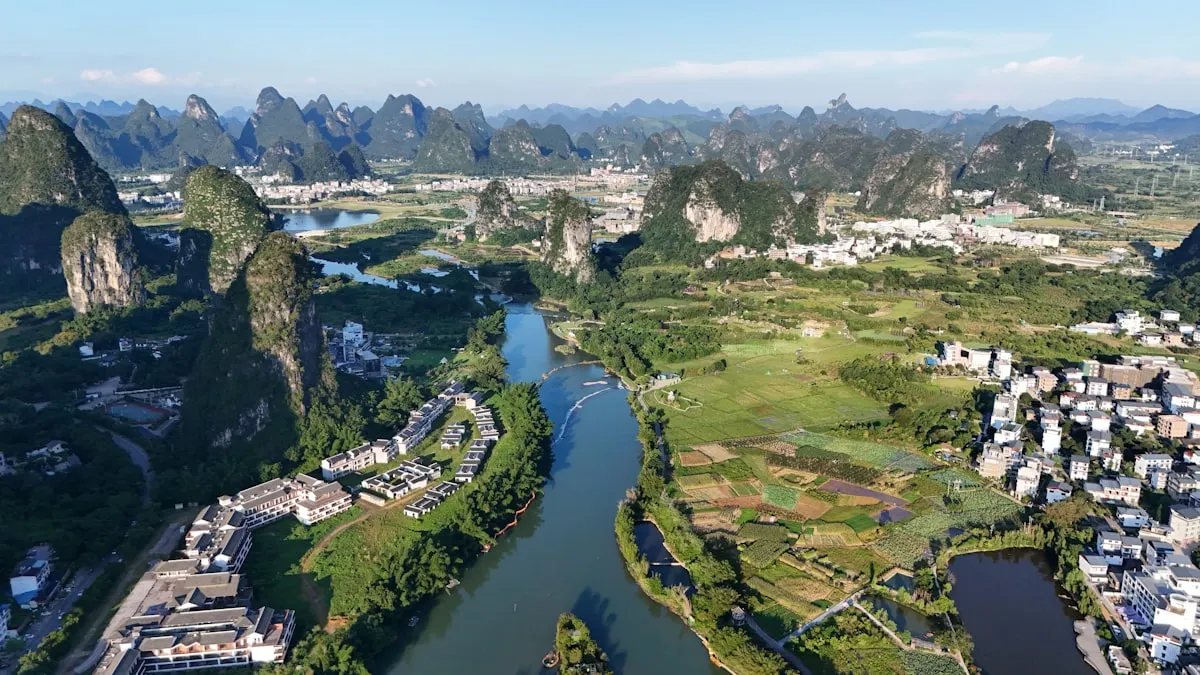
Wind & Water
The ancient art of reading landscapes to harmonise people with natural forces
Feng Shui (風水, literally "wind-water") is the traditional Chinese system of geomancy — the art and science of assessing landscapes to understand how natural energy (氣, Qi) flows through them.
Qi rides the wind and scatters, but is retained when encountering water.
Zangshu (葬書, Book of Burial) — the foundational principle of all Feng ShuiHistorical Origins
Earliest Evidence
Burial sites show careful orientation according to cardinal directions and terrain.
Guo Pu (郭璞) — Zangshu
Systematised burial geomancy principles, articulating how landforms determine Qi flow.
Yang Yunsong (楊筠松) — Form School
Imperial geomancer who founded the Form School in Jiangxi. Authored Hanlongjing and Yilongjing on tracing dragon veins.
Compass School Matures
Flying Stars (Xuan Kong) developed, Luopan refined. Feng Shui became integral to imperial city planning.
The Form School (巒頭派)
The Form School reads the physical landscape directly — mountains, rivers, terrain contours. Central is the concept of dragon veins (龍脈): ridges along which Qi flows from distant peaks to the dragon's lair (龍穴).
The Compass School (理氣派)
The Compass School introduces mathematical precision using the Luopan compass. It maps invisible energies of compass directions, trigram sectors, and temporal cycles.
The Eight Trigrams (八卦) form the backbone of directional analysis. Derived from the Yijing, the trigrams — Qian, Kun, Zhen, Xun, Kan, Li, Gen, Dui — each govern a direction with specific elemental and symbolic associations.
The most sophisticated method is Xuan Kong Feixing (玄空飛星, Flying Stars), which assigns shifting numerical values to directional sectors according to 20-year, annual, and monthly cycles. This allows practitioners to assess when a site's energies peak and decline.
The Luopan Compass
The Luopan (羅盤) is a portable encyclopaedia of Chinese cosmology. At its centre lies the Heaven Pool (天池) — a magnetic needle pointing to magnetic south. Radiating outward are concentric rings containing:
- 24 Mountains (二十四山) — 24 sectors of 15 degrees each, combining Earthly Branches, Heavenly Stems, and trigrams.
- Trigram rings — Earlier Heaven and Later Heaven arrangements for different analytical purposes.
- Stems and Branches — Various combinations for temporal and directional calculations.
- 28 Lunar Mansions — Correlating terrestrial directions with celestial constellations.
Feng Shui in Imperial China
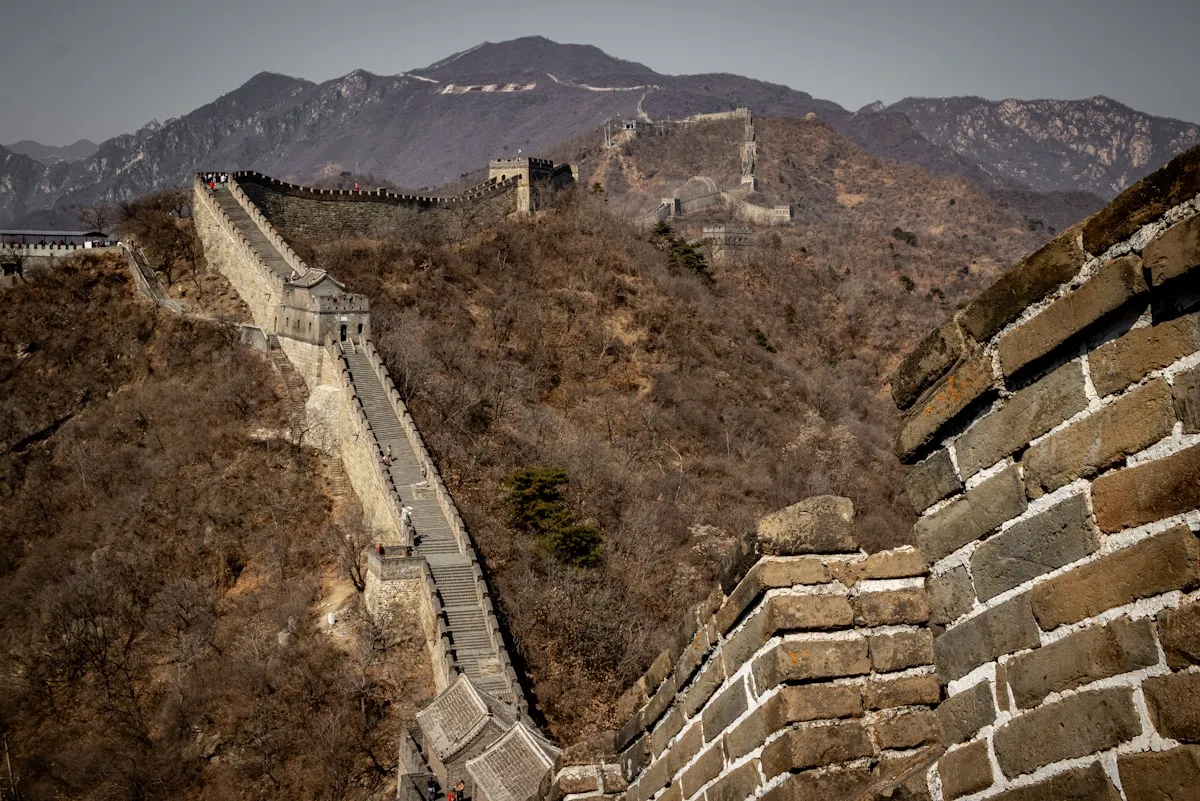
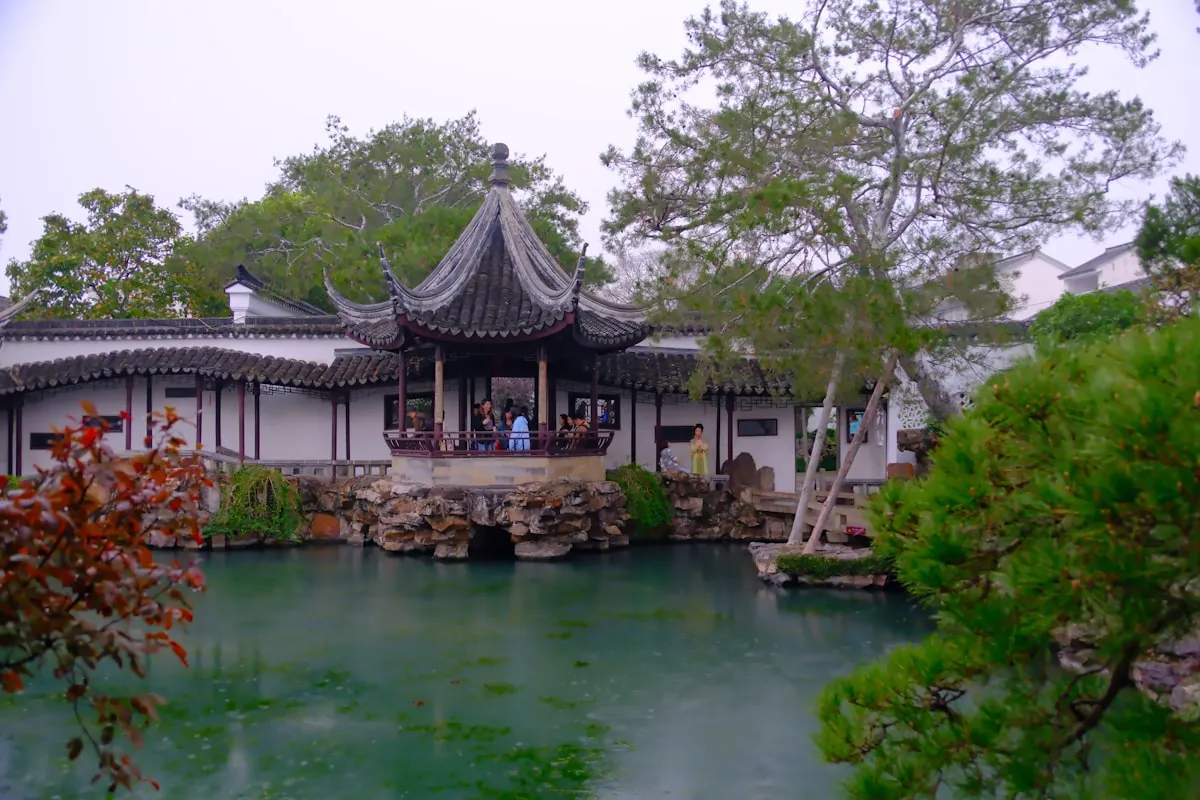
The Forbidden City sits on a north-south axis with Jingshan Hill behind (Black Tortoise), Tiananmen Square to the south (bright hall), and the Golden Water River curving in a jade-belt formation. The Ming Tombs valley — a horseshoe of mountains with a watercourse through the south — shelters thirteen emperors. Chang'an and Luoyang were systematic geomantic selections at the highest imperial level.
Five Elements in Feng Shui
The Five Elements provide the language for describing how Qi manifests. In the Form School, landscape shapes encode elements: pointed peaks are Fire, flat tops are Earth, rounded hills Metal, undulations Water, tall formations Wood.
In the Compass School, each trigram sector carries an element: Kan (north) is Water, Li (south) Fire, Zhen/Xun are Wood, Qian/Dui are Metal, Gen/Kun are Earth. The interaction between a building's direction and these sectors determines energy quality.
Classical vs. Modern Feng Shui
Classical Feng Shui (Pre-Qing)
- Physical site assessment & Luopan readings
- Flying Star calculations
- 24 mountains analysis
- Dragon vein tracing
- Literate scholars integrating cosmology & geography
Modern Pop Feng Shui
- Generic rules without compass measurement
- No landscape assessment
- BTB method — no classical lineage
- Interior decorating, not geomancy
- Philosophical foundations stripped away
Frequently Asked Questions
Feng Shui (風水) literally means 'wind-water.' It is a classical Chinese geomantic system over 3,500 years old that assesses landscapes to determine how Qi flows, harmonising structures with the natural environment.
No. Feng Shui is a geomantic and cosmological discipline, not a religion. While it shares philosophical roots with Daoism and draws on Yijing cosmology, it is a practical system of land and building assessment — closer to a traditional science than a spiritual practice.
The Form School reads physical landforms — mountains, rivers, terrain — to assess Qi flow. The Compass School uses the Luopan compass, trigrams, and mathematical calculations for directional and temporal analysis. Classical practitioners integrate both approaches.
Over 3,500 years. Evidence from Shang Dynasty burial sites shows auspicious orientation practices. The formal theoretical framework was established by Guo Pu in the Jin Dynasty (4th century CE) and refined through the Tang and Song dynasties.
Yes. Classical Feng Shui applies to any structure. Commercial Feng Shui assessments analyse the building's compass orientation, surrounding landforms, internal layout, and temporal Flying Star chart to optimise the environment for productivity and prosperity.
Discussion
Sign in with GitHub to join the conversation.